Best Robot Vacuum for Pet Hair (2026): 3 Honest Picks + What Actually Matters
As an Amazon Associate I earn from qualifying purchases. Prices and availability are accurate as of the date/time indicated and are subject to change.
The short answer
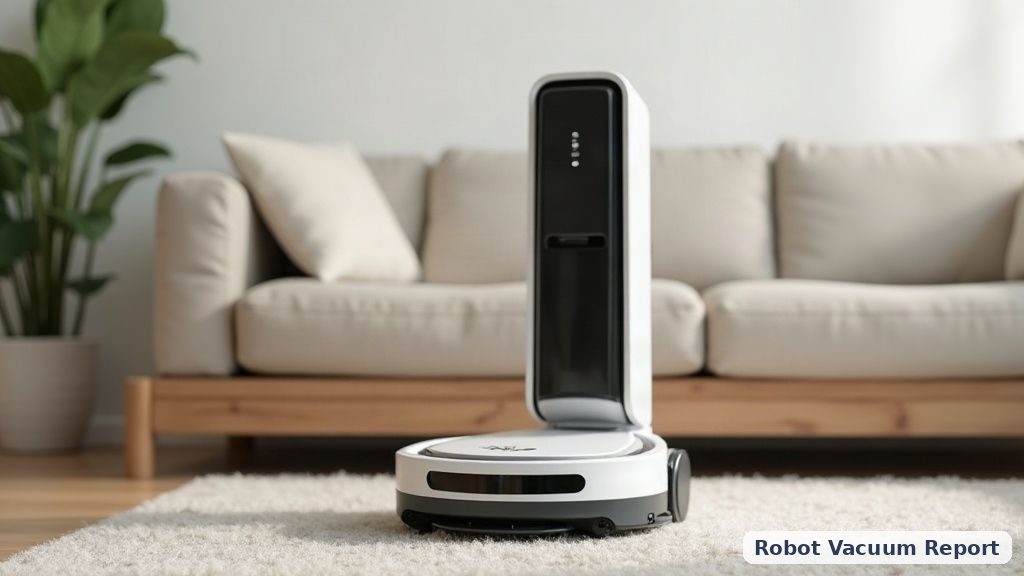
If you only want one recommendation: VONKO Robot Vacuum and Mop, 8000Pa, Self-Emptying. For most pet-owning households, the VONKO 8000Pa self-emptying model is the correct pick: enough suction for embedded hair on carpet, self-emptying base means you're not touching hair-clogged bins weekly, and the price sits below flagship models with similar specs. Buy the ECOVACS only if you also want mopping; buy the Roomba 675 only for lightly-shedding pets and lowest upfront cost.
Check price on Amazon →🔍 How this guide was put together (Editorial Standards)
This guide compares options using published manufacturer specifications, patterns in publicly visible owner reviews, and reputable expert sources. We do not operate a physical testing lab; see our how-we-research page for details.
EDITOR'S PICKS
Top Picks
TOP PICK

VONKO Robot Vacuum and Mop, 8000Pa, Self-Emptying, LiDAR Navigation
Best pick for most pet owners — self-empty solves the biggest daily annoyance of pet-hair robots.
RUNNER-UP

iRobot Roomba 675 Robot Vacuum
Best budget pick — trusted brand, but you WILL empty the bin daily with a shedding pet.
BEST VALUE

ECOVACS DEEBOT X11S OMNICYCLONE Robot Vacuum + Mop
Best premium pick — if you want vacuum + mop + near-zero maintenance.
📑 Table of contents
- Why pet hair breaks robot vacuums (and how to buy around it)
- Does suction rating (Pa) actually matter for pet hair?
- Is a self-emptying base worth the extra cost for pet owners?
- Who should buy which — decision framework
- Brush design — what to check beyond “rubber vs. bristle”
- Comparison
- What to check before buying, regardless of model
- Related guides
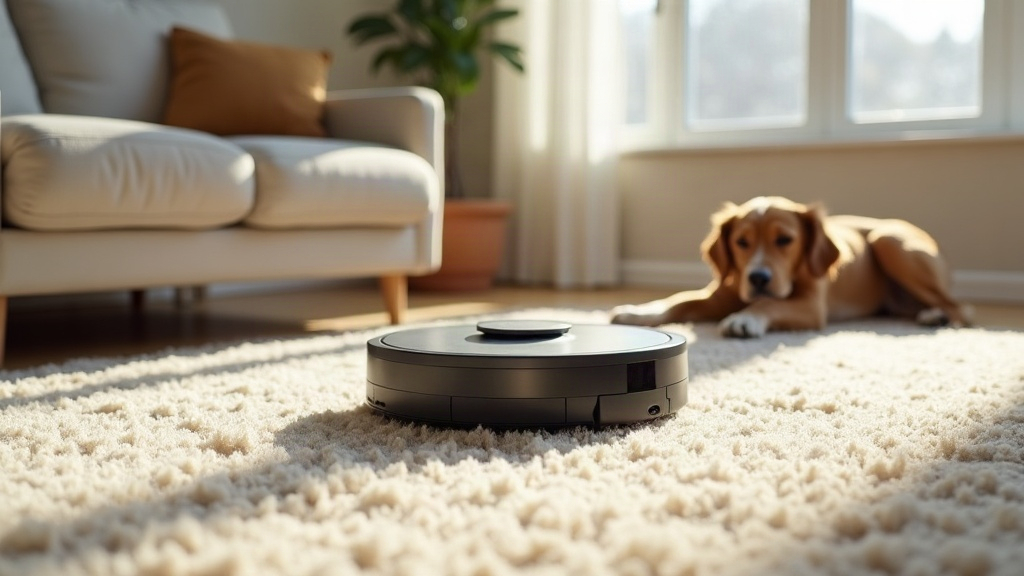
Pet hair breaks most robot vacuums within weeks. Not through catastrophic failure — through slow, cumulative decline: brush rollers wrap solid with hair, suction drops as filter clogs, the dustbin fills every 1-2 runs instead of every week, and the human eventually stops running it because the maintenance friction outweighs the cleaning benefit.
Below, three recurring picks specifically vetted for pet-hair handling: suction rated for embedded hair, brush designs that resist wrapping, and — for two of the three — self-emptying bases so the human isn’t the one pulling hair out of a bin every 3 days.
Why pet hair breaks robot vacuums (and how to buy around it)
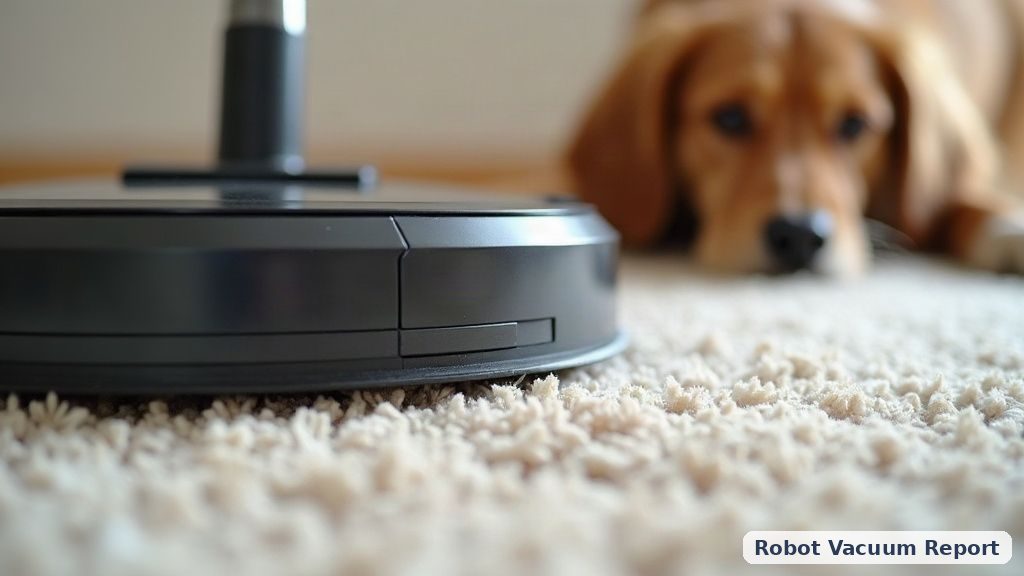
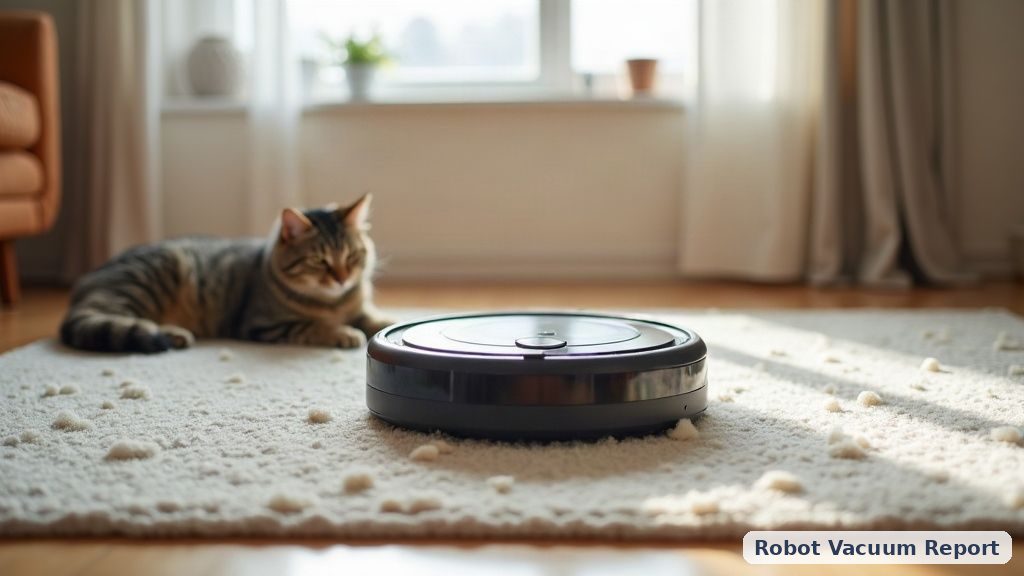
A typical dog or cat shedding at normal-for-their-breed rate produces enough loose hair per day to fill a robot vacuum’s onboard dustbin (300-500 mL) in 1-2 cleaning runs. In houses without pets, the same bin lasts 5-7 runs. Robot vacuums are designed and marketed against the no-pet baseline.
This means the practical decisions for pet homes are different from the marketing:
-
Self-empty bases matter far more than for pet-free homes. The extra $100-200 for a self-empty model pays for itself in avoided daily bin-emptying friction.
-
Brush design matters more than raw suction. Rubber/silicone brushes resist hair wrap. Bristle brushes tangle. All modern models tell you the brush type — check.
-
Filter accessibility matters more. Pet-owner vacuums need HEPA or similar dense filters that catch dander. Those filters clog faster and need cleaning every 1-2 weeks vs. every 4-6 in pet-free homes. Verify the filter is easy to remove and rinse before buying.
Does suction rating (Pa) actually matter for pet hair?
Yes, but only past a threshold. Below roughly 4000Pa, embedded pet hair on carpet tends to stay put; above that, most modern robot vacuums pull it up fine. The bigger differentiator isn’t raw suction — it’s what happens to the hair AFTER it’s picked up.
A vacuum with high suction but a narrow brush gap will still tangle and stop working mid-cleaning. A vacuum with moderate suction but excellent hair-flow-through (rubber brush + wide filter aperture) may outperform higher-Pa competitors in real weeks-of-use pet testing.
For reference, the picks above:
- Roomba 675: baseline standard suction — sufficient for lightly-shedding cats or short-haired dogs on hard floor
- VONKO 8000Pa: high suction — handles medium-shedding dogs or moderate-carpet pet homes
- ECOVACS DEEBOT X11S: high suction + specialized brush design + self-washing mop — handles heavy shedding plus wet cleaning
Is a self-emptying base worth the extra cost for pet owners?
For anyone with a dog or cat that sheds noticeably, yes. Here’s the economics:
Without self-empty: you dump the bin ~4-7 times per week (small onboard bins fill fast in pet homes). Each empty takes 60-90 seconds including brush inspection and hair removal. That’s 4-10 minutes of daily maintenance friction.
With self-empty: you empty the LARGER base bag once every 30-60 days. Base bag emptying takes 2-3 minutes but happens 20× less often. Total maintenance: ~2-5 minutes per MONTH.
The self-empty model costs $100-200 more upfront but returns 20-50 hours per year to the human. For most pet owners this math is obvious. The one exception: if your robot vacuum will run mostly on hard floors with occasional pet fur (not carpet), the smaller onboard bins fill slower, and self-empty is more marginal.
Who should buy which — decision framework
Buy the VONKO 8000Pa if:
- You have a shedding dog or cat, or multiple pets
- You value not touching pet-hair-clogged bins daily
- Your home is a mix of carpet and hard floors
- The newer brand doesn’t bother you (established support for firmware updates seems reasonable so far)
Buy the Roomba 675 if:
- Budget is the hard constraint — self-emptying is out of reach
- You have a lightly-shedding pet (short-hair breed, indoor cat)
- Your floors are primarily hard surfaces, not carpet
- You value iRobot’s brand history — 20+ years of robot vacuums, US customer support, high parts availability
Buy the ECOVACS DEEBOT X11S if:
- You want both vacuum AND mop for a pet home
- The self-washing mop feature actually matters to you (yes, mops get hair-tangled just like brushes)
- You have floor space for the large Omni station
- Budget isn’t the primary constraint
Brush design — what to check beyond “rubber vs. bristle”
Brush type gets marketed as a simple binary but the practical differences run deeper:
- Full rubber roller (most modern flagship models): rubber sweeps hair to the suction chamber, minimal wrap. Best for heavy shedding. Downside: rubber can develop flat spots over 2-3 years of daily use, reducing effectiveness.
- Silicone tined: raised silicone fingers instead of solid rubber. Similar anti-wrap performance, easier to clean when hair does wrap.
- Bristle (Roomba 675 and most budget models): traditional bristle brush. Cheapest, most familiar, but pet hair wraps within 2-4 hours of runtime. Requires manual removal of wrapped hair every 1-3 days.
- Dual brush (two rollers, one rubber + one bristle): compromise design in some mid-range models. Marginally better anti-wrap than pure bristle.
If your pet sheds visibly (fur on furniture within 24 hours of vacuuming), prioritize rubber or silicone brush design. Bristle brushes are a maintenance tax you’ll pay daily.
Comparison
| Model | Suction | Self-empty | Brush | Best for |
|---|---|---|---|---|
| VONKO 8000Pa | 8000Pa | Yes (60-day claimed) | Anti-wrap design | Most pet homes, best value |
| iRobot Roomba 675 | Standard | No | Bristle | Budget, light shedding, hard floors |
| ECOVACS DEEBOT X11S | High | Yes + self-wash mop | Rubber + AI | Heavy shedding, vacuum+mop needed |
What to check before buying, regardless of model
- Rubber vs. bristle brush (see above): critical for pet homes
- Bin or bag capacity: if not self-empty, verify bin size handles 1 full pet-home cleaning without stopping
- Filter accessibility: you’ll clean it 2-4× more often than non-pet homes — verify it’s easy to remove and rinse
- Multi-floor mapping: if pet hair is worse in specific rooms (near a pet bed, by doors), room-specific scheduling means you can run more often in hot spots without full-house cleaning every time
- Cliff sensor sensitivity if you have open stairs: pet hair on cliff sensor lenses can degrade detection over time. Wipe sensor windows weekly if you have stairs
📚 Related In-Depth Analysis
- Compare findings with our guide on Robot Vacuum Vs Regular Vacuum.
- Compare findings with our guide on Robot Vacuum Obstacle Avoidance.
📚 Related In-Depth Analysis
- Compare findings with our guide on Budget Self Empty Robot Vacuum.
- Compare findings with our guide on Quiet Robot Vacuum Apartment.
🔧 Interactive Planning Tool
Need exact measurements for your setup? Use our Furniture Clearance & Obstacle Navigator to Verify robot turret height against sofa clearance and carpet thresholds.
Related guides
- Robot vacuum for hardwood floors
- Best budget self-emptying robot vacuum
- Robot vacuums for multi-floor homes
- Quiet robot vacuums for apartments
Related: Robot vacuum vs a regular vacuum
Related: Best obstacle avoidance
Related: Robot vacuum maintenance routine
Related: Robot vs stick vacuum for pet hair