Quiet Robot Vacuums for Apartments (2026)
As an Amazon Associate I earn from qualifying purchases. Prices and availability are accurate as of the date/time indicated and are subject to change.
🔍 How this guide was put together (Editorial Standards)
This guide compares options using published manufacturer specifications, patterns in publicly visible owner reviews, and reputable expert sources. We do not operate a physical testing lab; see our how-we-research page for details.
EDITOR'S PICKS
Top Picks
TOP PICK

Tapo LiDAR Robot Vacuum and Mop, RV30 Max Plus
Tapo (TP-Link's smart-home line) markets this specifically with LiDAR self-emptying — a budget-friendlier entry from an established networking brand.
RUNNER-UP

Shark Navigator Robot Vacuum + Self-Empty Base, AV2110S
Shark's self-empty entry — same brand-reliability logic as their other models, relevant if apartment lease requires major-brand appliances for insurance/deposit reasons.
BEST VALUE

Shark Navigator Robot Vacuum, SmartPath Navigation, RV2110
Non-self-empty Shark variant — smaller footprint (no base station) which matters more in apartments than houses.
📑 Table of contents
In a house, robot vacuum noise is mostly a “does it wake the dog” concern. In an apartment — especially with neighbors below or beside you — it’s a “will someone complain” concern, and that changes what actually matters when picking a model.
Decibel rating vs. real-world apartment noise
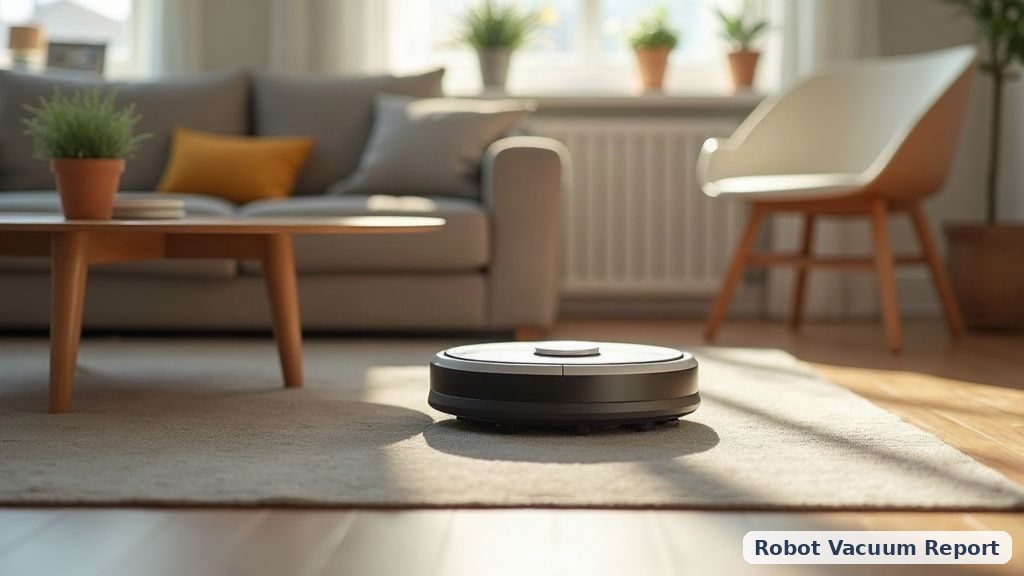
Manufacturers list decibel (dB) ratings, but the number that matters more for apartments is impact noise — how much the vibration transmits through a shared floor, not just how loud the motor sounds in the room. A robot with a slightly higher dB rating but softer wheels/better vibration dampening can be LESS disruptive to a downstairs neighbor than a technically “quieter” model with harder wheels. Spec sheets don’t capture this distinction; it’s mostly floor-type dependent (hardwood/tile transmits impact noise more than carpet).
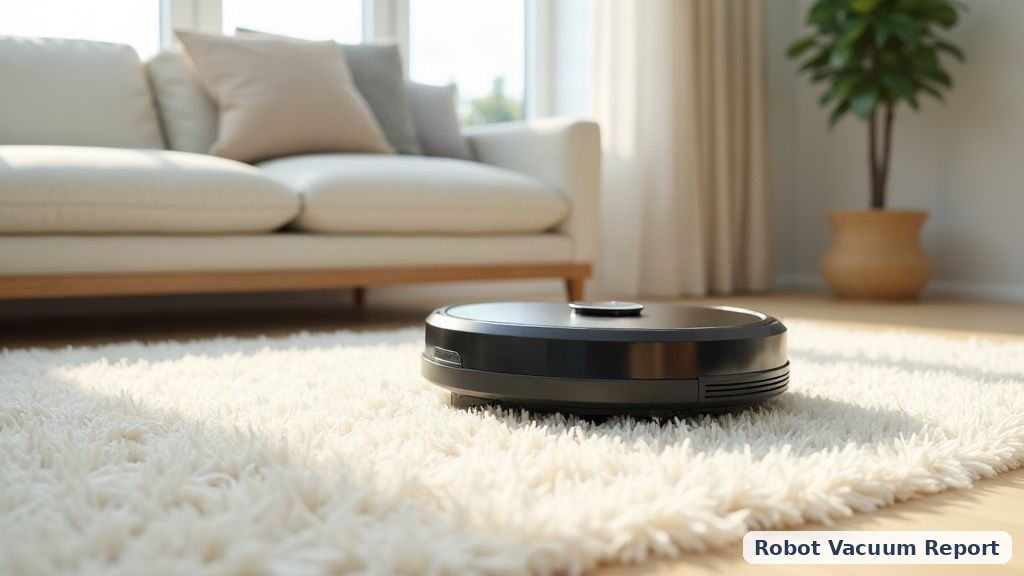
Self-empty base — noise trade-off apartment owners should know
Self-emptying bases have a second, separate noise source: the emptying cycle itself, which runs a brief but noticeably loud suction burst when the robot docks. In a house this is a minor annoyance; in an apartment with thin walls, it can be the single loudest noise the robot makes all day — louder than the actual cleaning run. If minimizing peak noise matters more than minimizing total noise, a non-self-empty model (like the second Shark pick above) may actually be the better apartment choice despite requiring manual bin emptying.
Scheduling around shared walls
Most robot vacuum apps let you schedule cleaning windows — worth setting explicitly in an apartment to avoid running during commonly quiet hours (early morning, late evening) regardless of which model you pick. This matters more for apartment noise complaints than the marginal dB difference between models.
Comparison
| Model | Self-empty | Brand | Note |
|---|---|---|---|
| Tapo RV30 Max Plus | Yes | TP-Link (networking) | Budget entry, LiDAR |
| Shark AV2110S | Yes | Established | Self-empty burst noise applies |
| Shark RV2110 | No | Established | No empty-cycle noise, manual bin |
📚 Related In-Depth Analysis
- Compare findings with our guide on Robot Vacuum For Thick Carpet.
- Compare findings with our guide on Do Robot Vacuums Work In The Dark.
📚 Related In-Depth Analysis
- Compare findings with our guide on How To Prevent Robot Vacuum Pet Waste Accidents.
- Compare findings with our guide on Robot Vacuum With Stairs Drop Detection.
🔧 Interactive Planning Tool
Need exact measurements for your setup? Use our Furniture Clearance & Obstacle Navigator to Verify robot turret height against sofa clearance and carpet thresholds.
Related guides
- Best budget self-emptying robot vacuum
- Best robot vacuum for pet hair
- Robot vacuum for hardwood floors