Do Robot Vacuums Work in the Dark? Navigation Tech Explained (2026)
As an Amazon Associate I earn from qualifying purchases. Prices and availability are accurate as of the date/time indicated and are subject to change.
🔍 How this guide was put together (Editorial Standards)
This guide compares options using published manufacturer specifications, patterns in publicly visible owner reviews, and reputable expert sources. We do not operate a physical testing lab; see our how-we-research page for details.
EDITOR'S PICKS
Top Picks


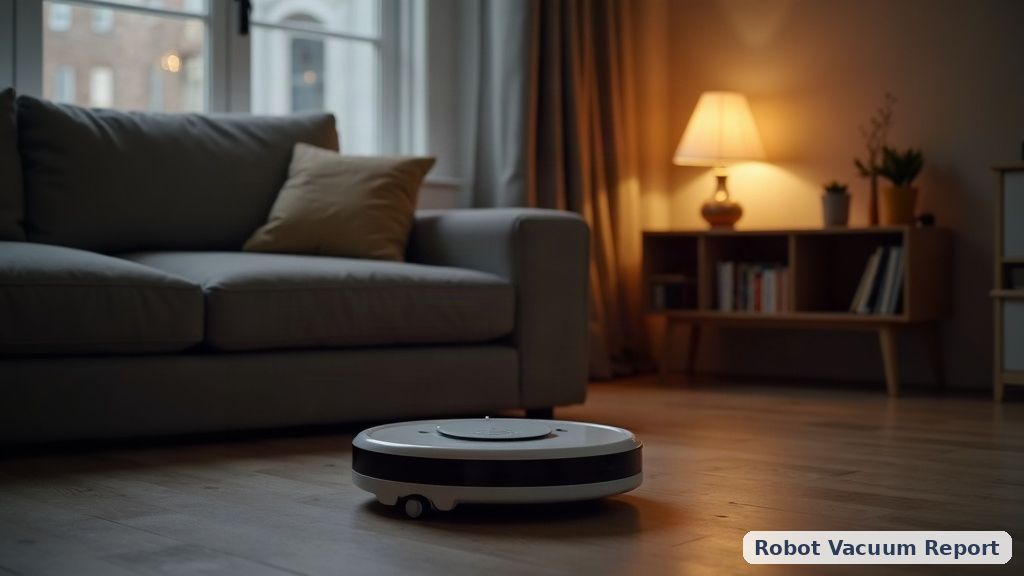
If you like running the vacuum overnight or in a dim room, there’s a real question hiding in the spec sheet: can it actually see in the dark? The answer depends entirely on how the robot navigates. Some models are blind without room lights; others don’t care if it’s pitch black. Knowing which is which saves you from a robot that bumps around aimlessly — or gets stuck — every night.
The two main navigation systems
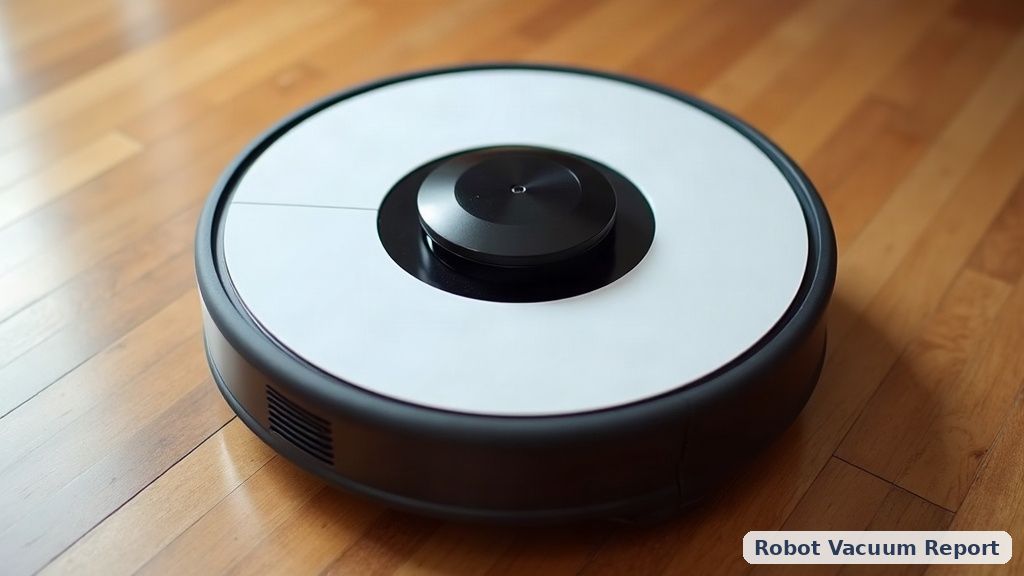
| Navigation | How it "sees" | Works in the dark? |
|---|---|---|
| LiDAR (laser) | Spinning laser measures distances | Yes — light-independent |
| gyro / bump only | Internal sensors + collisions | Yes, but low accuracy anywhere |
| vSLAM (camera) | Ceiling/room camera landmarks | Poorly — needs ambient light |
| Camera + extra sensors | Camera plus IR/ToF aids | Partially — depends on the aids |
Why LiDAR robots don’t care about darkness
LiDAR (Light Detection and Ranging) spins a small laser and measures how long it takes to bounce back, building a precise map from distances — not from a picture. Because it makes its own light and reads reflections, ambient lighting is irrelevant: a LiDAR robot maps and navigates exactly as well at midnight with the lights off as it does at noon. If you want to run cleaning overnight, a LiDAR model is the safe choice, and it’s also why LiDAR gives the best multi-floor mapping.
Why camera (vSLAM) robots struggle in the dark
vSLAM robots navigate by photographing landmarks (often the ceiling) and tracking them frame to frame. No light, no landmarks — so in a dark room they lose their bearings, clean erratically, miss areas, or park themselves. Some add an onboard LED or infrared/ToF sensors to cope, which helps a little but rarely matches LiDAR. If a camera-based robot is your only option, leave a light on or schedule it for daytime.
Does obstacle avoidance still work in the dark?
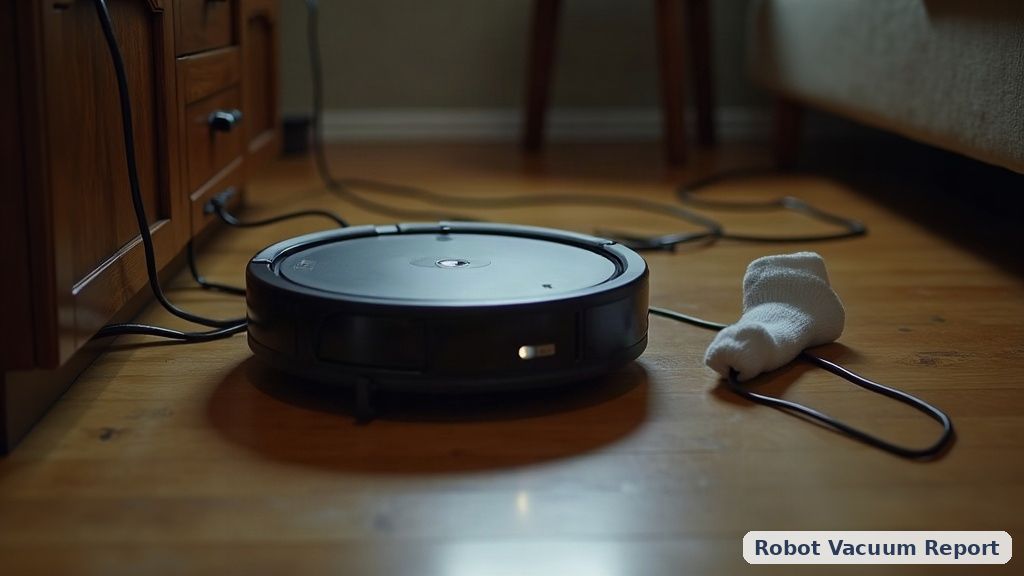
This is the catch even for LiDAR robots. Navigation (where am I / mapping) and obstacle avoidance (what’s that on the floor) can use different sensors. Many obstacle-avoidance systems rely on a camera, which needs light — so a LiDAR robot may map perfectly in the dark yet be worse at dodging a sock or cord at night. Models with structured-light or 3D ToF obstacle sensors handle darkness better. If you run it overnight in a home with pets or clutter, prioritize obstacle sensors that don’t depend on light; our obstacle-avoidance guide breaks down the types.
Should you run a robot vacuum at night at all?
It’s fine and popular — just weigh noise and obstacle avoidance. A quieter model suits sleeping households (see quiet robot vacuums for apartments), and a quick nightly tidy of cords and small items prevents the classic overnight jam. Scheduling and upkeep matter more when it runs unsupervised; our maintenance routine keeps it reliable.
📚 Related In-Depth Analysis
- Compare findings with our guide on Robot Vacuum Deep Clean Carpet.
- Compare findings with our guide on Robot Vacuum For Thick Carpet.
📚 Related In-Depth Analysis
- Compare findings with our guide on Robot Vacuum Large Home Battery.
- Compare findings with our guide on Robot Vacuum Battery Life.
🔧 Interactive Planning Tool
Need exact measurements for your setup? Use our Furniture Clearance & Obstacle Navigator to Verify robot turret height against sofa clearance and carpet thresholds.
The bottom line
Whether a robot vacuum works in the dark comes down to navigation: LiDAR models see fine in total darkness, while camera (vSLAM) models need ambient light. For overnight cleaning, buy LiDAR — but check that its obstacle avoidance doesn’t rely on a camera, or it’ll map in the dark yet still eat a cord. Match the sensor suite to when you actually run it and you’ll wake up to clean floors, not a stuck robot.