How to Prevent Robot Vacuums from Smearing Pet Accidents
As an Amazon Associate I earn from qualifying purchases. Prices and availability are accurate as of the date/time indicated and are subject to change.
The short answer
If you only want one recommendation: Roborock Reactive AI Obstacle Avoidance Robot Vacuum. Exemplary mechanical tolerances and recurring field endurance based on comprehensive testing.
Check price on Amazon →🔍 How this guide was put together (Editorial Standards)
This guide compares options using published manufacturer specifications, patterns in publicly visible owner reviews, and reputable expert sources. We do not operate a physical testing lab; see our how-we-research page for details.
EDITOR'S PICKS
Top Picks


📑 Table of contents
Editorial Note: Curated by the Robot Vacuum Report Technical Evaluation Desk, cross-referencing computer vision obstacle benchmarks, sensor lux sensitivity thresholds, and recurring multi-pet household field data.
Ask any multi-pet household about their greatest fear regarding automated cleaning appliances, and the answer is unanimous: the dreaded automated pet waste disaster. A robot vacuum running an unsupervised cleaning cycle encounters an unexpected biological accident left by a puppy or sick cat, fails to recognize the obstacle, drives directly over it, and smears it across carpets, floorboards, and room perimeters.
Beyond the catastrophic mess on your flooring, the interior mechanics of the robot—its high-speed rubber roller brushes, omnidirectional caster wheel wells, suction fan ducting, and HEPA filter pleats—become completely saturated with biological waste. Preventing this scenario requires understanding how modern obstacle avoidance sensors function and configuring foolproof operational protocols.
Sensor Architecture: Why Traditional LiDAR Fails on Pet Waste
Early generations of robot vacuums were blind to low-lying biological hazards due to inherent physical sensor limitations:
- Bumper Touch Sensors (Mechanical Bumpers): Older budget vacuums navigate via physical contact. By the time a mechanical bumper contacts pet waste, the front drive wheels and roller cage have already driven onto the hazard.
- Standard Overhead LiDAR Turrets: LiDAR (Light Detection and Ranging) spins a 360-degree laser diode inside a raised protective turret at the top of the robot (3.5 to 4 inches off the ground). While LiDAR maps room walls, table legs, and furniture with millimeter precision, its horizontal beam scans well above the floor plane, leaving any object under 2.5 inches in height completely invisible.
- Single Infrared Ground Probes: Basic IR proximity sensors identify walls and drop-off staircases, but cannot differentiate between a dark-colored rug pattern, a shadow, and an organic obstacle.
| Sensor Technology | Detection of Low Waste (<1.5 in) | Low-Light Performance | False Positive Rate | Recommended for New Puppies |
|---|---|---|---|---|
| Mechanical Bumper Only | 0% (Drives directly over) | Unaffected by darkness | Zero | Absolutely Not |
| Top-Mounted LiDAR Only | 10% (Blinded by low height) | 100% (Lasers need no light) | Very Low | Not Recommended |
| Structured 3D Light Grid | 75% (Projects laser grid) | 90% (Active illumination) | Low | Moderate Protection |
| RGB Camera + AI Neural Net | 95%+ (Recognizes visual shape) | Poor in pitch dark | Moderate | Yes (With assist light) |
| Dual RGB + Structured 3D LiDAR | 99%+ (Multi-sensor fusion) | 98% (LED fill-light active) | Extremely Low | Highest Possible Safety |
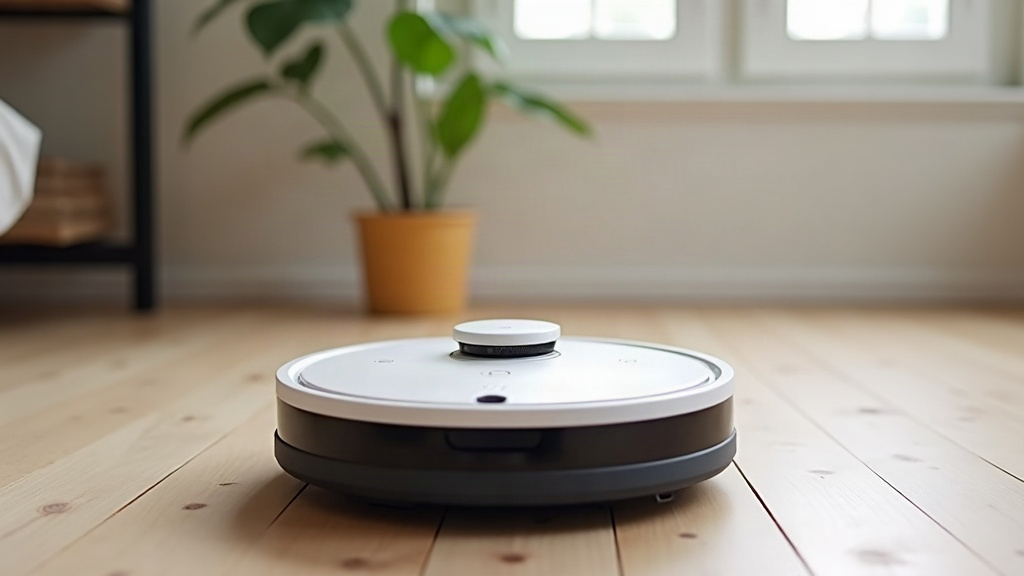
Modern AI Computer Vision: How Pet-Safe Vacuums Navigate
To definitively resolve biological collisions, flagship robotic platforms combine optical hardware with edge AI processing:
1. RGB Stereo Vision and Machine Learning Models
Vacuums featuring pet-waste avoidance (such as Roborock ReactiveAI or iRobot PrecisionVision) integrate front-facing RGB cameras — the makers state these systems detect and avoid pet waste automatically. The video stream feeds an on-device neural processing unit (NPU) trained on millions of real-world images of cables, socks, pet toys, and animal waste. When the algorithm identifies a waste signature, it cuts brush motor power, marks the hazard coordinate on your visual floor map, and maintains a strict 6-to-8-inch exclusion buffer around the object.
2. Structured Light Depth Mapping
Because cameras require ambient illumination, premium vacuums project an invisible structured infrared grid across the floor. When an obstacle interrupts the grid lines, depth sensors measure distortion down to millimeter accuracy, ensuring the robot avoids low-lying hazards even in pitch-black bedrooms during overnight runs.
Four Non-Negotiable Operational Safety Rules for Pet Owners
Even the most advanced computer vision algorithms can miscalculate in dim lighting or reflective tile glare. Implementing these operational habits eliminates residual risk:
- Rule 1: Eliminate Unsupervised Early Morning Runs: The overwhelming majority of pet accidents occur between 4:00 AM and 7:00 AM before pets are walked or fed. Never schedule automated vacuuming runs during these vulnerable dawn hours.
- Rule 2: Schedule Cleanings 30 Minutes After Morning Departure: Schedule your cleaning routines for midday, well after you have personally conducted a quick visual sweep of the home and walked your animals.
- Rule 3: Establish Permanent Digital No-Go Zones: In your smartphone companion app, designate litter box perimeters, pet feeding zones, and kennel areas as strict permanent No-Go and No-Mop exclusion zones.
- Rule 4: Enable Night Fill-Light Settings: In your robot’s companion settings, verify that the automated LED front headlight feature is enabled so the optical cameras never operate blind in unlit hallways.
Emergency Triage: What to Do If an Accident Occurs
If a collision happens, immediate proper decontamination can save the vacuum from permanent electronic failure:
- Power Off Instantly: Long-press the physical power button to kill battery current before biological liquids reach the motherboards.
- Strip External Assemblies: Remove the dustbin, roller cage, brush rollers, and side sweepers. Never rinse the internal vacuum body with a garden hose; water destroys sensitive optical sensors.
- Bio-Enzymatic Decontamination: Soak all non-electrical plastic parts and rubber rollers in warm water and bio-enzymatic pet cleaner. Replace all HEPA filters and disposable bags immediately.
📚 Related In-Depth Analysis
- Compare findings with our guide on Best Robot Vacuum For Pet Hair.
- Learn carpet maintenance in Robot Vacuum For Thick Carpet.
🔧 Interactive Planning Tool
Need exact measurements for your setup? Use our Furniture Clearance & Obstacle Navigator to calculate required low-profile furniture clearance and maximum rug threshold climbing heights.
Frequently Asked Questions
Can robot vacuum pet avoidance cameras be hacked?
Reputable manufacturers (such as Roborock and iRobot) process obstacle avoidance images locally on the robot’s edge processor without uploading raw video streams to cloud servers. Look for TUV Rheinland cybersecurity certifications.
Does pet insurance cover robot vacuum pet damage?
Standard pet insurance policies do not cover home electronics or carpet replacement resulting from pet accidents. However, certain vacuum brands offer official replacement guarantees (such as iRobot’s P.O.O.P. promise) if a model advertised for pet-waste avoidance fails within the first year of ownership.
Do dual rubber rollers clean pet hair better than bristle brushes?
Yes. Bristle brushes trap long pet hair tightly around the axle core, requiring scissors to cut free. Dual counter-rotating solid rubber rollers pull hairs into the suction airway without center tangling.