Robot Vacuums Safe for Homes With Stairs (2026)
As an Amazon Associate I earn from qualifying purchases. Prices and availability are accurate as of the date/time indicated and are subject to change.
🔍 How this guide was put together (Editorial Standards)
This guide compares options using published manufacturer specifications, patterns in publicly visible owner reviews, and reputable expert sources. We do not operate a physical testing lab; see our how-we-research page for details.
EDITOR'S PICKS
Top Picks
TOP PICK

ECOVACS DEEBOT N20 PRO Plus Robot Vacuum and Mop
45-day self-empty capacity, anti-tangle tech listed — established ECOVACS line with a long navigation-tech track record relevant to stair-edge sensing reliability.
RUNNER-UP

Eureka E20 Plus Robot Vacuum and Mop Combo
LiDAR navigation + 45-day self-empty capacity — LiDAR mapping generally gives more precise edge-detection than camera-only budget models.
BEST VALUE

Vacmaster V10i 3-in-1 Robot Vacuum and Mop Combo
3-in-1 combo listed — newer/smaller brand than the other two, worth extra caution checking reviews for stair-edge-specific complaints before buying if stairs are a hard safety requirement.
📑 Table of contents
Every robot vacuum on the market ships with SOME form of drop/cliff sensor — it’s a baseline requirement to avoid destroying the unit on day one. The real question for homes with stairs isn’t “does it have drop detection” (all of them do) but “how reliably does it work in practice,” which spec sheets don’t fully answer.
How drop/cliff sensors actually work
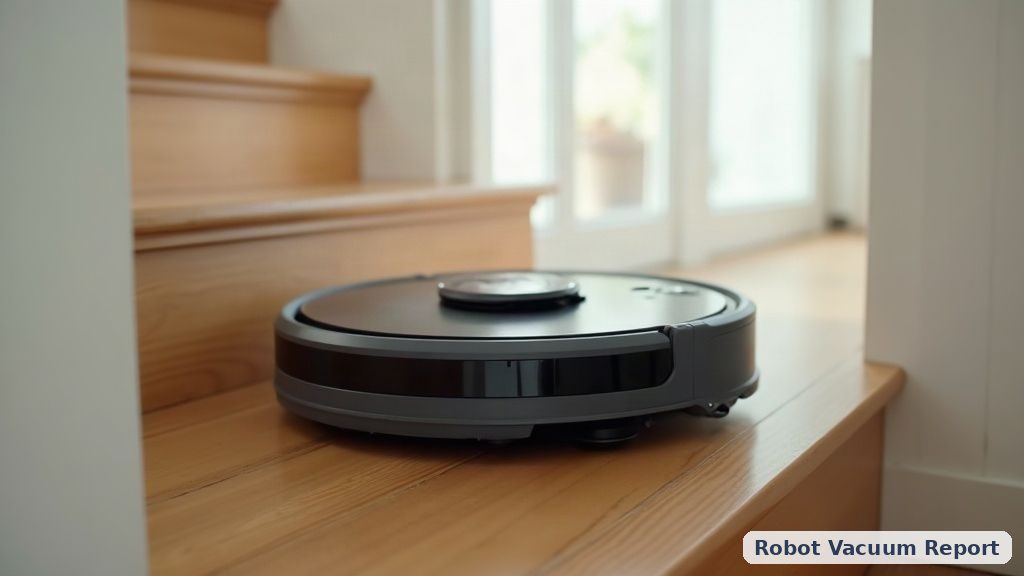
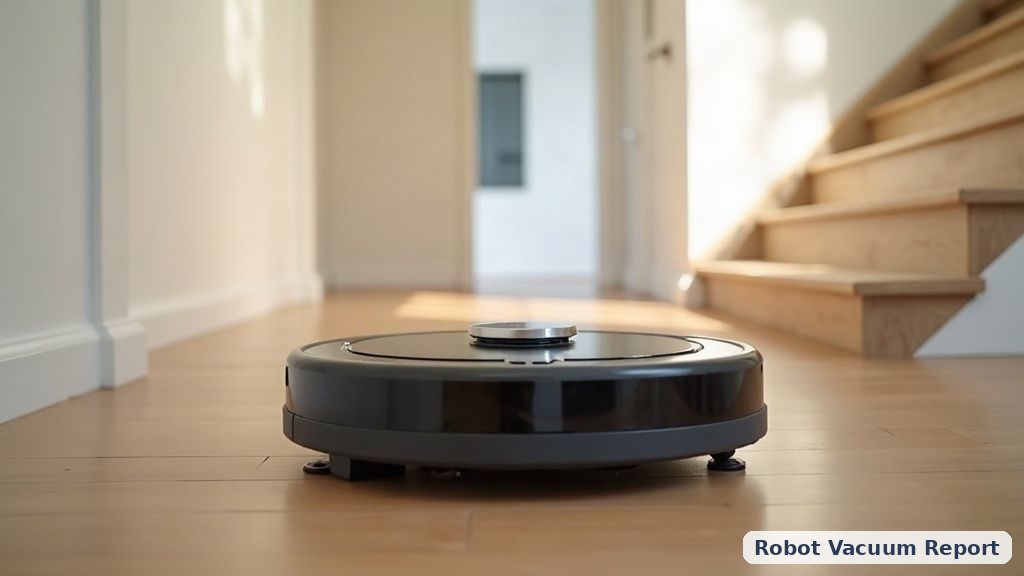
Most robot vacuums use infrared (IR) sensors on the underside that detect a sudden increase in distance to the floor (i.e., a drop-off) and stop or reverse before going over the edge. This works reliably on hard, matte, light-colored floors. It becomes LESS reliable on very dark or glossy/reflective flooring right at a stair edge — the IR signal can behave unpredictably on those surfaces, which is a known general limitation of IR-based cliff sensors across the whole robot vacuum category, not specific to any one brand.
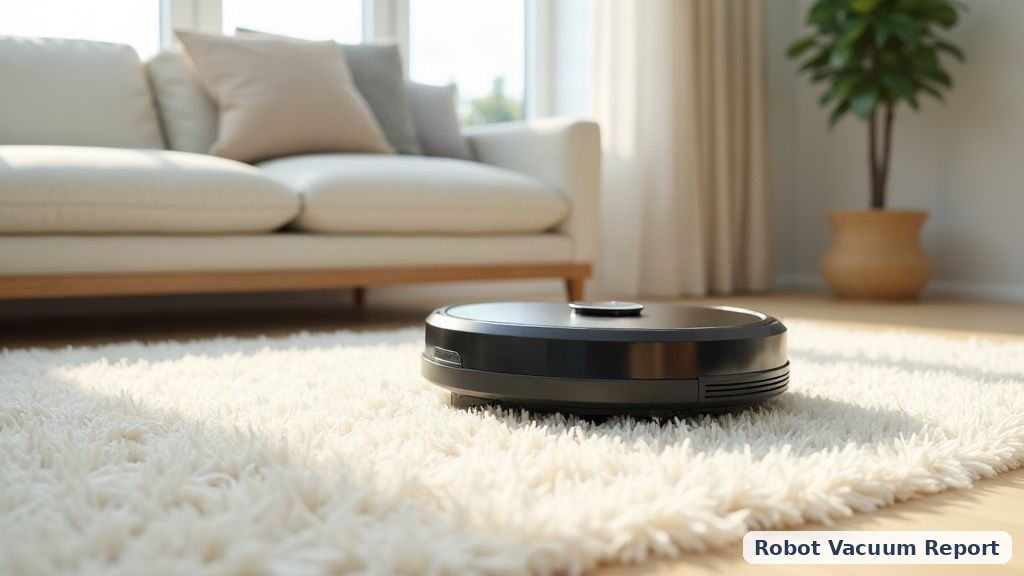
Does LiDAR navigation make stairs safer than camera-only or bump-sensor models?
Indirectly, yes — LiDAR builds a precise map of the room including hard boundaries like stair edges, so the robot avoids getting close to the edge in normal operation rather than relying purely on last-second cliff-sensor reaction. Camera-only or bump-sensor models navigate more reactively, meaning they may approach the stair edge more directly before the cliff sensor kicks in. Both types have cliff sensors as the last line of defense — LiDAR just reduces how often that last line gets tested.
Should you use a physical barrier in addition to sensors?
For homes with an open stairwell and no way to close it off, yes — most robot vacuum brands sell magnetic strip boundary markers or support virtual no-go zones set in the app, and using one of these as a backup to sensor-based detection is standard practice, not a sign the sensors are unreliable. Treating cliff sensors as the ONLY safeguard on an open stairwell is higher risk than most owners realize.
Comparison
| Model | Navigation | Notable feature |
|---|---|---|
| ECOVACS DEEBOT N20 PRO Plus | Established line | Anti-tangle, 45-day capacity |
| Eureka E20 Plus | LiDAR | 45-day capacity, precise mapping |
| Vacmaster V10i | Standard | 3-in-1 combo, newer brand |
📚 Related In-Depth Analysis
- Compare findings with our guide on Robot Vacuum Vs Regular Vacuum.
- Compare findings with our guide on Do Robot Vacuums Work In The Dark.
📚 Related In-Depth Analysis
- Compare findings with our guide on Best Robot Vacuum For Pet Hair.
- Compare findings with our guide on Robot Vacuum For Thick Carpet.
🔧 Interactive Planning Tool
Need exact measurements for your setup? Use our Furniture Clearance & Obstacle Navigator to Verify robot turret height against sofa clearance and carpet thresholds.
Related guides
- Robot vacuum for hardwood floors
- Robot vacuums for multi-floor homes
- Best budget self-emptying robot vacuum